
Italy and Spain end reciprocal border checks: what travellers need to know
 by
Babylon Radio
Listen nowItaly and Spain have agreed not to renew the reciprocal border checks on flights and ferries between the two countries. Spain’s checks on passengers arriving from Italy ended at midnight on 22 October 2026. Italy’s last notified day of checks on arrivals from Spain is 23 October 2026, but the cited notice does not give an exact end time for the Italian checks. Normal Schengen rules on carrying identity documents still apply.
What was agreed on 22 October?
On 22 October, the Italian and Spanish interior ministers agreed by phone that the checks in force in both countries would not be extended, according to Anadolu Agency, citing a statement from Italy’s Interior Ministry. The ministry said the decision would come with more information-sharing between the two countries.
When do the checks end?
Spain’s checks were set by Order INT/1033/2026 in the Spanish Official Gazette (BOE-A-2026-20743). It ran from 00:00 on 8 October to 24:00 on 22 October. The order says the checks lift automatically at the end of that period, and any new extension would need a new decision.
Italy’s latest notice to the European Commission covers 16 to 23 October 2026 for air and sea arrivals from Spain. You can see it in the Commission’s full list of member state notifications. If you are flying or sailing from Spain to Italy on 23 October, expect that you may still be checked.
Which travel documents should you still carry?
The end of these two measures does not remove every border check or document rule in the Schengen area. Other countries run their own temporary checks. For example, the European Commission’s list of current border controls shows France checking all its internal borders, including with Spain and Italy, and its next period runs from 1 November 2026 to 30 April 2027. You can read more in our guide to France’s border checks extended to April 2027.
EU, EEA and Swiss citizens
Carry a valid passport or national identity card. The EU’s Your Europe service says EU nationals must be able to show one of these when a country brings back internal border checks. A driving licence is not a travel document. If you hold an Italian paper identity card, see our article on Italy’s paper ID cards.
Non-EU citizens
Carry your valid passport and any document that shows your right to travel or live in the Schengen area, such as a visa or residence permit. The Your Europe page for non-EU nationals explains the rules. Airlines and ferry companies may also ask to see identity documents at boarding.
What should travellers do now?
- Keep your passport or ID card and any residence permit in your hand luggage.
- If you travel from Spain to Italy on 23 October, allow extra time in case checks are still running.
- Check boarding times and document rules with your airline or ferry company.
- If your trip goes through France or another Schengen country, check the Commission’s current list before you travel.
Why were the checks introduced?
Italy brought in checks on arrivals from Spain on 1 August 2026 after large numbers of people crossed into Ceuta at the end of July. Spain then introduced checks on passengers arriving from Italy from 8 August. Both governments gave public order and internal security reasons in their official notices. The Schengen Borders Code allows temporary internal checks of this kind, for a limited time.
Official information
- Spanish Official Gazette: Order INT/1033/2026
- European Commission: temporary reintroduction of border control
- European Commission: full list of member state notifications (PDF)
Last verified: 23 October 2026. This article explains official travel information and is not legal advice.
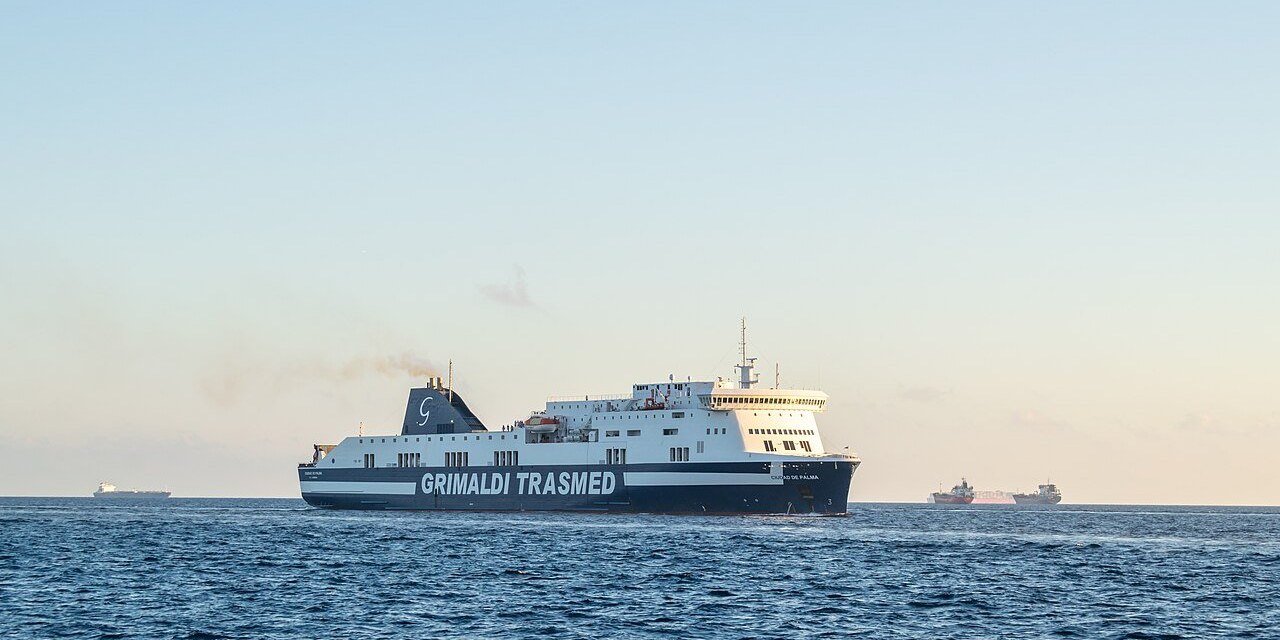
Featured image: a ferry in Barcelona harbour, photographed by Liridon on 2 October 2023. Source: Wikimedia Commons. Licensed under CC BY-SA 4.0. The image is an archive travel photograph and does not show the 2026 checks. Cropped to a 2:1 ratio.