
US expands social media visa screening to TN, TD and media applicants from 1 October
 by Celia Rhodes
 by Celia Rhodes
Babylon Radio
Listen nowIn short: The US Department of State says that from 1 October 2026 it will expand its online-presence review to applicants for I, TN and TD nonimmigrant visas. Applicants in those categories are instructed to set the privacy settings on all of their social-media profiles to public or open for the screening process.
The change matters most to Canadian and Mexican professionals using the USMCA-linked TN route, their TD dependants, and foreign journalists or other qualifying media representatives applying for I visas. It is an expansion of a screening policy already applied to several other nonimmigrant categories, rather than a new social-media review system covering every visa applicant for the first time.
What changes on 1 October 2026?
In an announcement dated 18 September 2026, the State Department said it would broaden online-presence review to three additional nonimmigrant classifications:
- I visas, for qualifying representatives of foreign media.
- TN visas, for eligible Canadian and Mexican professionals working in specified occupations under the USMCA framework.
- TD visas, for eligible dependants of TN professionals.
The department explicitly tells applicants for I, TN and TD visas to make all social-media profiles “public” or “open” to support the vetting process. The official announcement does not create a separate application form for these categories, nor does it say that having particular social-media content automatically leads to a refusal.
Which visa categories were already subject to online-presence review?
The State Department says the expanded screening already applies to a wider set of visa categories. Its 18 September notice lists diplomatic and official domestic-worker categories, students, exchange visitors, certain temporary workers and dependants, fiancé visas, religious workers and several humanitarian or law-enforcement-related classifications.
Among the better-known categories already listed are F-1 and M-1 students, J-1 exchange visitors, H-1B workers, H-3 trainees, certain H-4 dependants, K fiané visas, Q international cultural exchange participants and R religious-worker visas.
This distinction is important. The September announcement is specifically about adding I, TN and TD applicants to an existing screening approach. It should not be read as evidence that every US visa category has suddenly acquired an identical new rule.
What does “public or open” mean for applicants?
The department’s wording is direct: applicants in the newly covered categories are instructed to set the privacy settings on all social-media profiles to public or open. The announcement does not set out a detailed list of platforms, a minimum history period for these newly added categories, or a checklist of content that is considered acceptable.
Applicants should therefore follow the instructions issued by the State Department and the US embassy or consulate handling their case, and make sure information in their visa application is accurate and consistent. Babylon would not recommend trying to guess what an officer wants to see or changing biographical facts to make an online profile appear more favourable.
Why is the United States expanding the checks?
The State Department says it uses all available information in visa screening to assess whether an applicant may be inadmissible, including national-security and public-safety concerns. It describes every visa adjudication as a national-security decision and says applicants must credibly establish that they qualify for the visa requested and intend to comply with the terms of admission.
That is the government’s stated rationale. The announcement does not provide statistics showing how often social-media review changes the result of an application, and it does not set out a new refusal rate for TN, TD or I applicants.
What TN professionals should know
TN status is particularly important for internationally mobile professionals because it allows eligible Canadian and Mexican citizens to work in the United States in qualifying professional occupations. The new announcement does not abolish the TN route or change its occupational list. It changes the screening environment for visa applicants in the TN classification from 1 October.
Canadian citizens can have different documentary and entry procedures from Mexican citizens under the TN framework, so travellers should not assume that every TN case follows an identical consular process. The State Department announcement concerns the online-presence review associated with the visa screening policy. Applicants should check the official procedure that applies to their nationality and circumstances.
What foreign media applicants should know
The I classification covers qualifying representatives of foreign media travelling to the United States to work in their professional capacity. From 1 October, applicants in this category are also included in the expanded online-presence review described by the State Department.
For international journalists and media organisations, the practical point is to build the extra screening requirement into travel planning. Where a visa interview or adjudication is required, employers should avoid assuming that historic processing times will necessarily remain unchanged simply because the underlying visa category has not changed.
Does this affect people who already hold a visa?
The 18 September announcement is framed around visa applicants and the screening and vetting process. It does not say that all existing TN, TD or I visa holders must immediately take any separate action simply because the policy expands on 1 October.
Someone renewing a visa, applying again after a previous visa expires, or otherwise entering a new adjudication process should check the latest State Department and consular instructions at that time.
Practical checklist before applying
- Confirm that your visa classification is I, TN or TD and that the new rule applies to your application from 1 October 2026.
- Follow the State Department instruction to set social-media privacy settings to public or open for the vetting process.
- Make sure names, employment details, travel history and other material facts in your application are accurate and internally consistent.
- Check the website of the US embassy or consulate handling the case for local appointment and document requirements.
- Allow additional time if your travel depends on a visa decision. Do not book non-refundable travel solely on the assumption of a particular processing time.
Official source
The change is set out in the US Department of State notice, “Announcement of Expanded Screening and Vetting for Visa Applicants”, last updated on 18 September 2026.
Last verified by Babylon: 19 September 2026. Immigration rules and consular procedures can change. Check the relevant US government source before making travel or employment decisions.
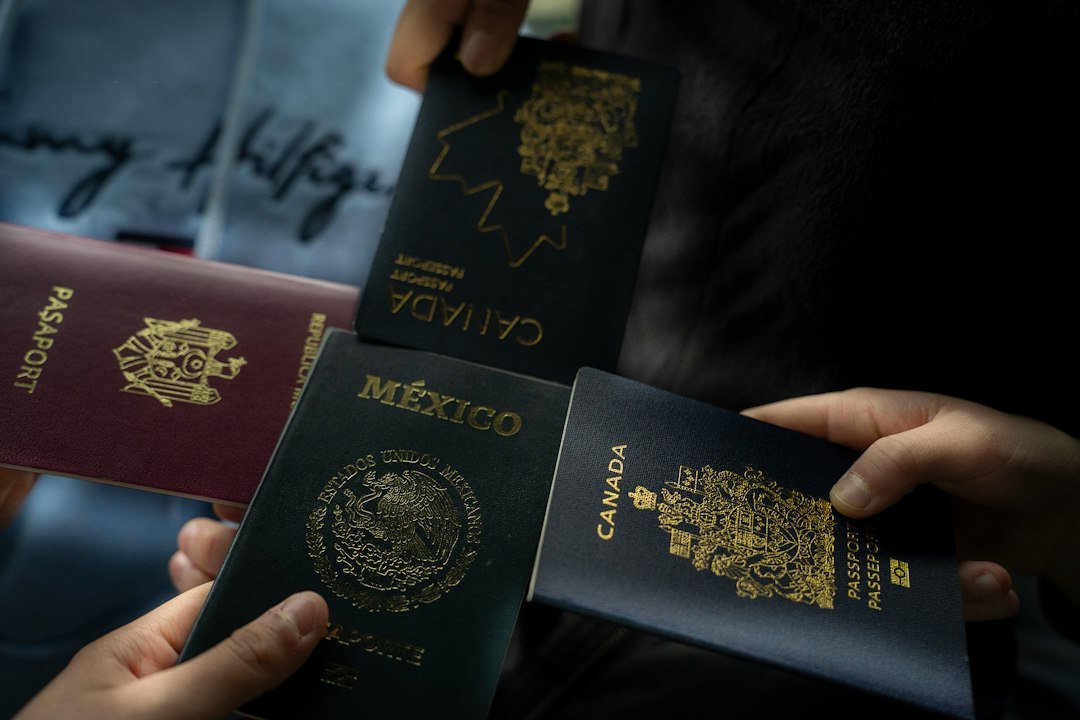
Featured image: Annie V / Unsplash.