
Tomoka Nishiyama’s shogi breakthrough: what it means, and how to try the game
 by
Babylon Radio
Listen nowTomoka Nishiyama is set to become the first woman in Japan’s regular professional shogi ranks. For readers new to the game, the news is also a chance to understand a distinctive part of Japanese culture.
The Japan Shogi Association announced on 26 October 2026 that it had accepted her application to enter its Free Class. Her fourth-dan status will begin on 1 April 2027. The announcement is confirmed, but her new professional status has not started yet.
Why the wording matters
Women already play shogi professionally. The game has a separate women’s professional circuit, known as joryu kishi. Nishiyama’s move is into the regular kishi ranks, which are open to both men and women but have not previously included a woman.
EFE’s report from her Tokyo press conference explains that she plans to keep competing in women’s tournaments as well. Calling her simply Japan’s “first female professional shogi player” would overlook the women who already make their careers in the game.
How she qualified
Nishiyama successfully defended the Hakurei title, taking her total to five. The association says this earned her the Queen Hakurei qualification and the right to enter the Free Class under its rules. She submitted her entry request within the required period, and it was accepted.
The distinction is useful when following the story: winning the qualifying title, choosing to use that qualification and starting in the new category are separate steps.
A starting point for curious newcomers
Shogi is a two-player board game. According to the association’s introduction to shogi, it uses a nine-by-nine board, with each player starting with 20 pieces. Players take turns moving a piece, with the opposing king as the target.
You do not need to follow professional rankings to begin exploring it. The association’s illustrated rules pages cover the board, piece movements and basic play. These pages are in Japanese, so browser translation may help with the explanations.
If you would rather learn with other people, its school directory and branch directory offer places to start looking. Check the individual venue’s age range, fees, beginner provision and language support before visiting. A directory listing is not a promise of English-language teaching.
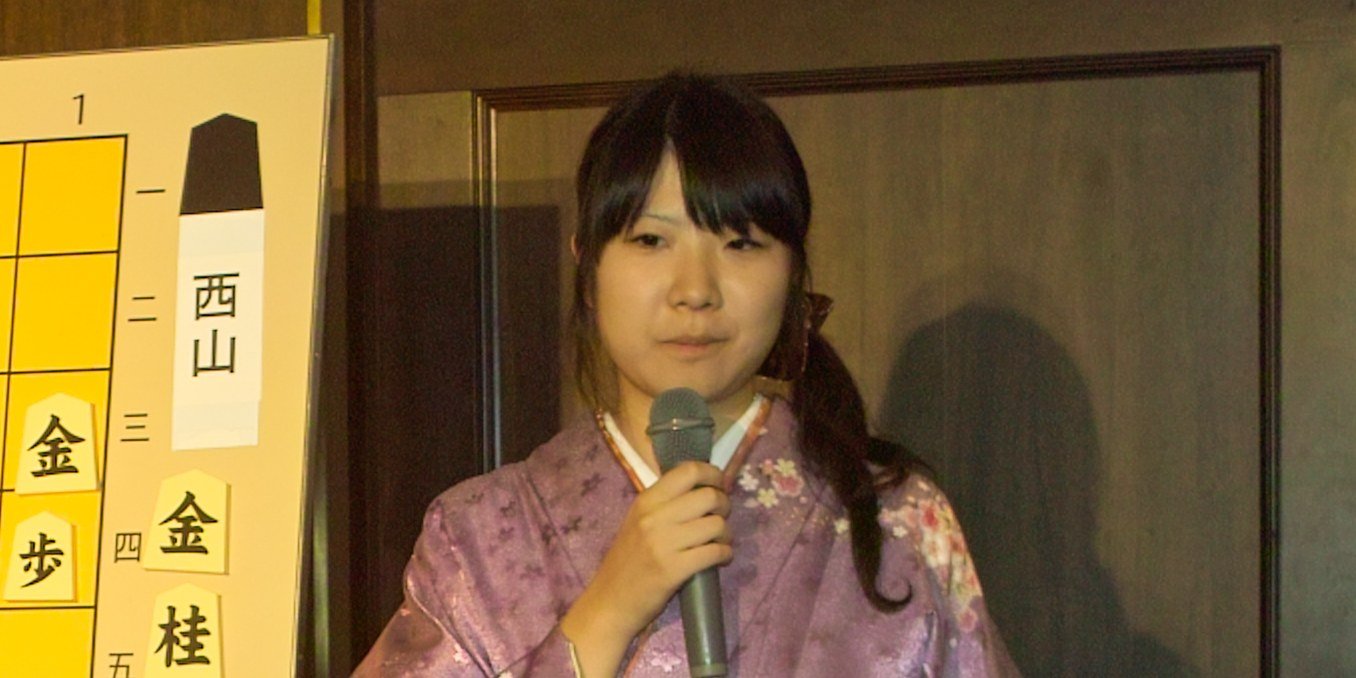
Archive photo: Tomoka Nishiyama in 2014. Photo: Pooh456, Wikimedia Commons, CC BY-SA 4.0 (cropped to 2:1). Taken in 2014, not at the 2026 announcement.