
Netherlands border controls ended, but mobile checks continue
 by Admin
 by Admin
Babylon Radio
Listen nowThe Netherlands ended its temporary internal Schengen border controls after 30 September 2026. Checks did not stop: from 1 October, the Royal Netherlands Marechaussee is using an expanded Mobile Security Monitoring framework, known by its Dutch abbreviation MTV.
For international residents, cross-border commuters and travellers, the practical message is to keep the right identity and travel documents with you. Checks remain possible on roads, international trains, waterways and selected flights from within the Schengen Area, but they are targeted rather than routine checks of every traveller.
What changed on 1 October 2026?
The temporary border-control regime that began on 9 December 2024 ended on 30 September 2026. The Dutch government confirmed the change on 24 September, and the Marechaussee updated its English guidance on 29 September.
From 1 October, internal-border monitoring is carried out under a revised and expanded MTV framework. The government says the Marechaussee can deploy the same capacity more flexibly and select locations, times and vehicles using information and risk assessments.
This is a change in the legal framework and operating method. It does not mean that every checkpoint has disappeared or that travellers can no longer be stopped.
Where can MTV checks take place?
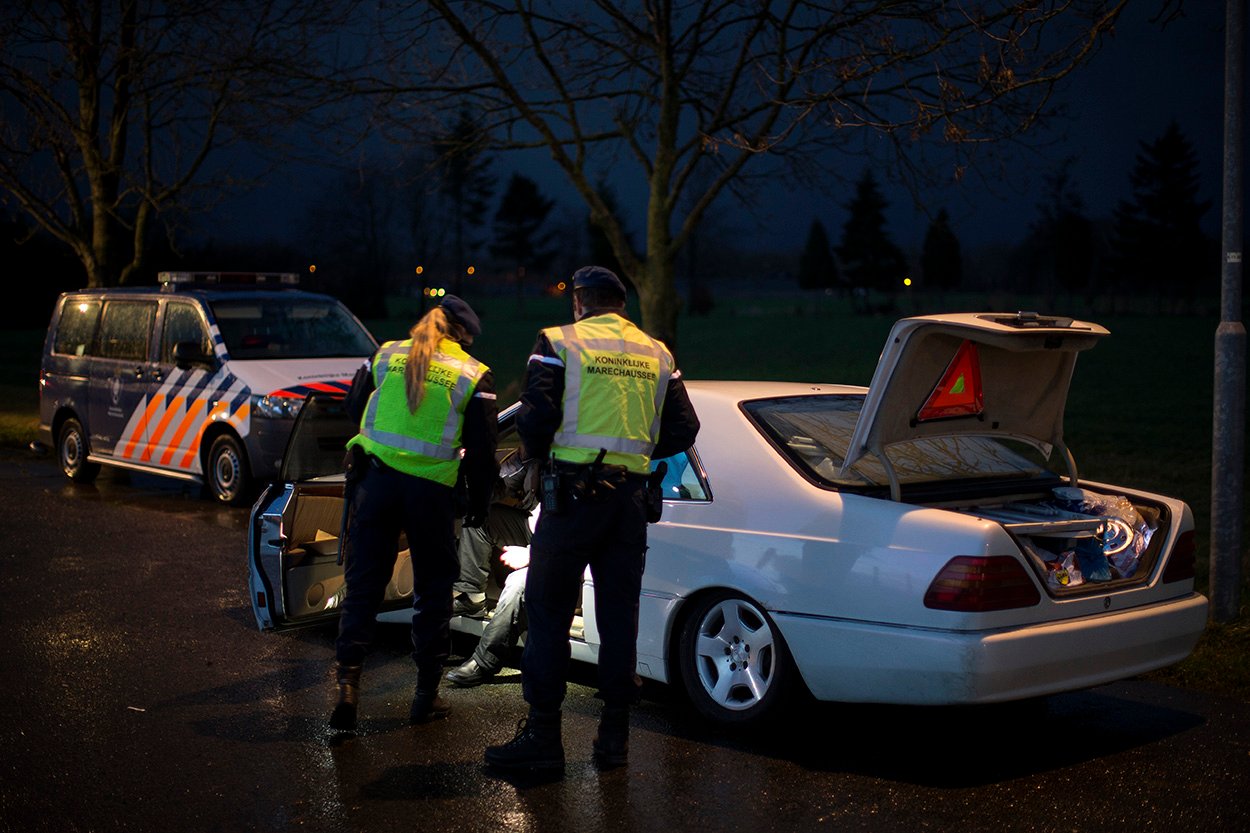
The Marechaussee describes MTV checks as targeted spot checks on people travelling to the Netherlands from another Schengen country. They can take place on roads, inside international trains, on the water and at airports.
- Roads: selected vehicles can be directed into a control lane, while other traffic continues. Motorcycle units can also select vehicles at the border and escort them to a suitable inspection point.
- Trains: officers can move through international trains and check selected passengers’ documents. The Marechaussee says there is no full inspection of every passenger.
- Airports: checks can take place at the arrival gate for selected flights from within the Schengen Area. Flights are chosen on the basis of information about crime or irregular migration.
- Waterways and ports: selected commercial and recreational vessels can be inspected. There is no standard check of every vessel.
The government’s explanation also says road monitoring may take place within a wider area near the borders with Belgium and Germany than the former temporary controls. A Dutch government letter describing the MTV system states that this inland border area extends up to 20 kilometres.
Will crossing the Dutch border be quicker?
Most people should be able to continue their journey without delay because MTV checks are selective. The government says ordinary border traffic should face as little disruption as possible, and not all traffic entering from Belgium or Germany will be checked.
However, no traveller can rely on a particular crossing, train or flight being free of checks. The timing and location are deliberately less predictable because the operation is information-led.
What documents should travellers carry?
Carry the valid passport or national identity card required for your journey. The Dutch government advises Dutch citizens travelling within the European Union to carry an identity card or passport, not only when crossing a border but also while staying in another EU country.
Other nationals should check the official requirements for their citizenship and immigration status. If you rely on a visa or residence document, keep the relevant document available with your passport or identity card where required. A driving licence is not a substitute for a travel document when travelling outside the Netherlands.
What does the change mean for cross-border commuters?
People who regularly travel between the Netherlands, Belgium and Germany should expect less visible, more targeted monitoring rather than a complete end to checks. Commuters and business travellers should allow a small margin for an occasional stop, especially on major road and rail routes.
The government says the new framework is intended to combat irregular migration, human smuggling and cross-border crime while reducing disruption for residents, businesses and workers in border regions.
Official sources
- Dutch government announcement, 24 September 2026
- Dutch government guide to internal-border monitoring
- Royal Netherlands Marechaussee: end of temporary controls
- Royal Netherlands Marechaussee: how MTV checks work
- Government of the Netherlands: travel documents
Image: an archived MTV check by the Royal Netherlands Marechaussee near the German border at Zevenaar/Elten on 17 January 2019. Photograph by Gerben van Es/Defensie, released under CC0 1.0 via Wikimedia Commons.
Information last verified: 2 October 2026.