
Japan residence fees rise to ¥75,000 — and permanent residence to ¥200,000
 by Admin
 by Admin
Babylon Radio
Listen nowJapan changed its immigration fees on 1 October 2026. A residence-status change or period-of-stay renewal now costs between ¥10,000 and ¥75,000 at an immigration counter, depending on the period granted. The online rate ranges from ¥9,000 to ¥65,000. Permanent-residence permission now carries a ¥200,000 fee, up from ¥10,000.
The new rates apply to applications received on or after 1 October 2026. If the Immigration Services Agency accepted your application by 30 September, the old rate still applies even when the decision arrives later.
Japan’s new residence renewal and status-change fees
The same duration bands apply to applications to change a status of residence and to extend a period of stay. The amount is determined by the period actually granted, not simply the period requested.
- 3 months or less: ¥10,000 at a counter; ¥9,000 online.
- More than 3 months, up to 1 year: ¥33,000 at a counter; ¥27,000 online.
- More than 1 year, under 3 years: ¥48,000 at a counter; ¥42,000 online.
- 3 years or more, under 5 years: ¥64,000 at a counter; ¥56,000 online.
- 5 years or more: ¥75,000 at a counter; ¥65,000 online.
Before the change, the fee was ¥6,000 for a counter application and ¥5,500 online, regardless of the period granted. An applicant receiving a five-year permission at a counter therefore pays ¥69,000 more under the new schedule.
Online applications remain cheaper, but the Immigration Services Agency says online payments use its designated payment service. Check the agency’s current payment instructions because a separate settlement charge may apply.
Permanent residence now costs ¥200,000
The fee payable when permanent residence is approved rose from ¥10,000 to ¥200,000. Permanent-residence applications submitted by 30 September 2026 remain under the former ¥10,000 rate, even if permission is granted after the new schedule began.
This is a permission fee rather than an up-front filing charge: the agency’s procedure pages state that it is required when permission is granted. Applicants should still budget for document collection, translations or professional advice separately.
Which date decides whether the old or new fee applies?
The key date is when the Immigration Services Agency received the application:
- Received by 30 September 2026: the former fee applies.
- Received on or after 1 October 2026: the new duration-based fee applies.
The decision date does not move an older application into the new fee schedule. Keep the application receipt or online submission record so you can show when the case was accepted.
What foreign residents and employers should do now
- Budget for the period that may be granted. A longer permission now produces a larger one-off fee, although it may reduce how frequently a renewal is needed.
- Compare counter and online routes. Online rates are lower, but confirm eligibility and the payment method before relying on the saving.
- Check who pays in an employment package. Employers that routinely cover immigration costs should update relocation and assignment budgets.
- Do not use the old flat fee in planning. The former ¥6,000 counter and ¥5,500 online rates survive only for applications received by 30 September.
- Use the official procedure page for your application. Fees are only one part of the process; required documents and eligibility rules have not been replaced by this price change.
Official information and verification
The figures and transition rule were checked on 5 October 2026 against the Immigration Services Agency’s pages for extensions of period of stay, changes of status and permanent residence, as well as its online-payment guidance and official fee leaflet.
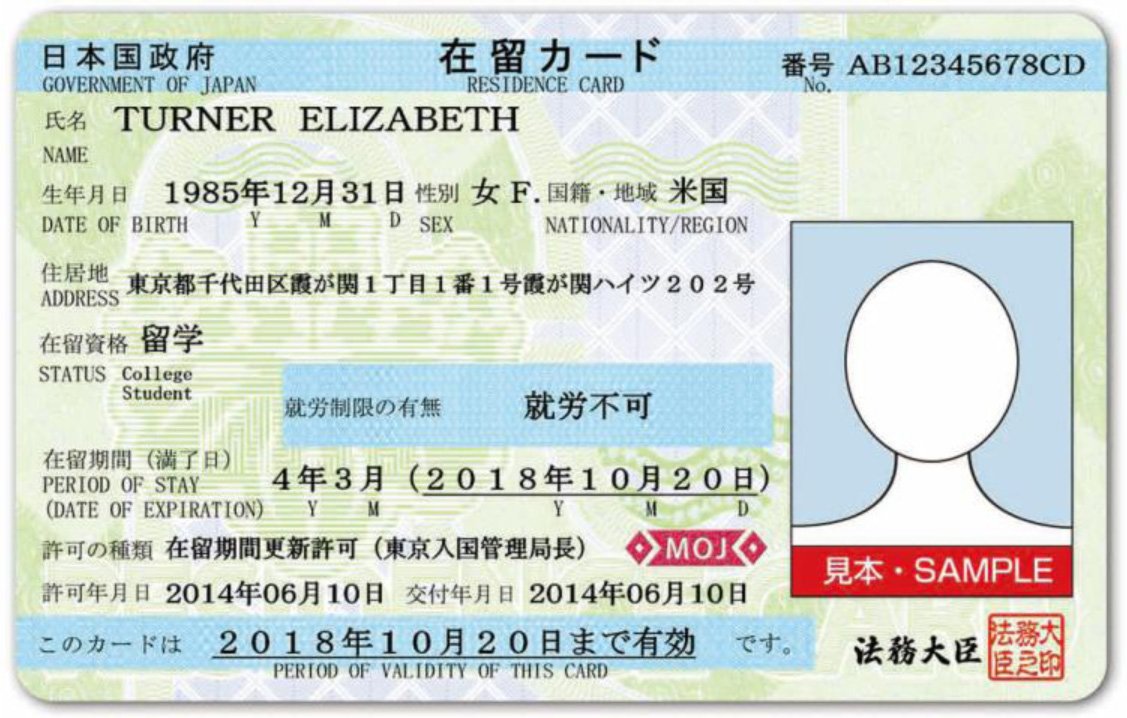
Featured image: sample Japanese residence card issued for public information by the Iwate Prefecture Government, licensed under the Government of Japan Standard Terms of Use 2.0 (CC BY 4.0-compatible), via Wikimedia Commons.