
Dónal Lunny dies aged 79: a newcomer’s guide to his music
 by
Babylon Radio
Listen nowDónal Lunny, one of the most influential figures in Irish traditional music, has died at the age of 79. The Arts Council and Aosdána said he passed away on 23 October 2026, and tributes have come from musicians, broadcasters and cultural bodies across Ireland.
For anyone who has moved to Ireland and heard a session in a pub, a festival stage or a radio programme of traditional music, there is a good chance his influence was somewhere in the sound. This short guide explains who he was and where a newcomer might start listening.
Who was Dónal Lunny?
Lunny was born in Tullamore, County Offaly, in 1947 and grew up in Newbridge, County Kildare. He began studying at the National College of Art and Design in Dublin in 1965, but music soon took over. His early success came with the folk group Emmet Spiceland.
The Irish Traditional Music Archive (ITMA) describes him as a musician, arranger and producer who “opened new harmonic and rhythmic possibilities” in Irish music. He was elected to Aosdána, Ireland’s affiliation of creative artists, in 2006, and last year he received the lifetime achievement award at the RTÉ Radio 1 Folk Awards.
Three bands that changed Irish music
Planxty. Lunny was a founding member alongside Christy Moore, Andy Irvine and Liam O’Flynn. The group reshaped how traditional songs and tunes were arranged and heard, and albums such as The Well Below the Valley and Cold Blow and the Rainy Night remain touchstones.
The Bothy Band. Lunny later joined this group, playing guitar and bouzouki. It quickly became one of the leading bands in Irish traditional music, known for its drive and energy.
Moving Hearts. With Christy Moore and piper Davy Spillane among its members, Moving Hearts blended rock rhythms with Irish traditional music and made a strong impression in the early 1980s.
The bouzouki and the sound he shaped
Lunny played many instruments, including guitar, bodhrán, mandolin and keyboards, but he was best known for the bouzouki. He picked it up from his bandmate Andy Irvine and later designed his own version to suit Irish music. As he once put it, “The bouzouki gave a much more open accompaniment to Irish music,” as quoted by The Irish Times.
As a producer, he worked on albums for artists including Paul Brady, Elvis Costello and Sinéad O’Connor. He was producer and musical director of the soundtrack for the BBC series Bringing It All Back Home, which traced the journey of Irish music around the world. In more recent years he played with the group Mozaik and continued to perform with Zoë Conway and Máirtín O’Connor. This summer he also appeared with Zoë Conway at Fleadh Cheoil na hÉireann in Belfast.
A newcomer’s way in
- Start with the bands. Listen to a Planxty album from start to finish, then a Bothy Band record, then Moving Hearts. Hearing them side by side shows how much ground he covered.
- Listen for the accompaniment. Rather than following only the melody, notice the bouzouki or guitar underneath it. That rhythmic, open style of backing is a big part of his legacy.
- Explore the archives. RTÉ Archives has a profile of Dónal Lunny with material from across his career, and RTÉ Culture has gathered classic performances from its archives. Availability of some clips may vary depending on where you are.
- Go to a session. Traditional music is best understood live. If you are new to pub culture, our guide to Irish craic and the social code is a friendly place to start, and our guide to Féile Frank Harte in Dublin, held in September 2026, shows how festivals keep the tradition going.
Remembered
Shona McCarthy, Director of the Arts Council, called him “a trailblazer, inspiring generations of musicians and expertly balancing tradition and reinvention.” ITMA said his imagination “helped shape the sound of Irish music over more than half a century.”
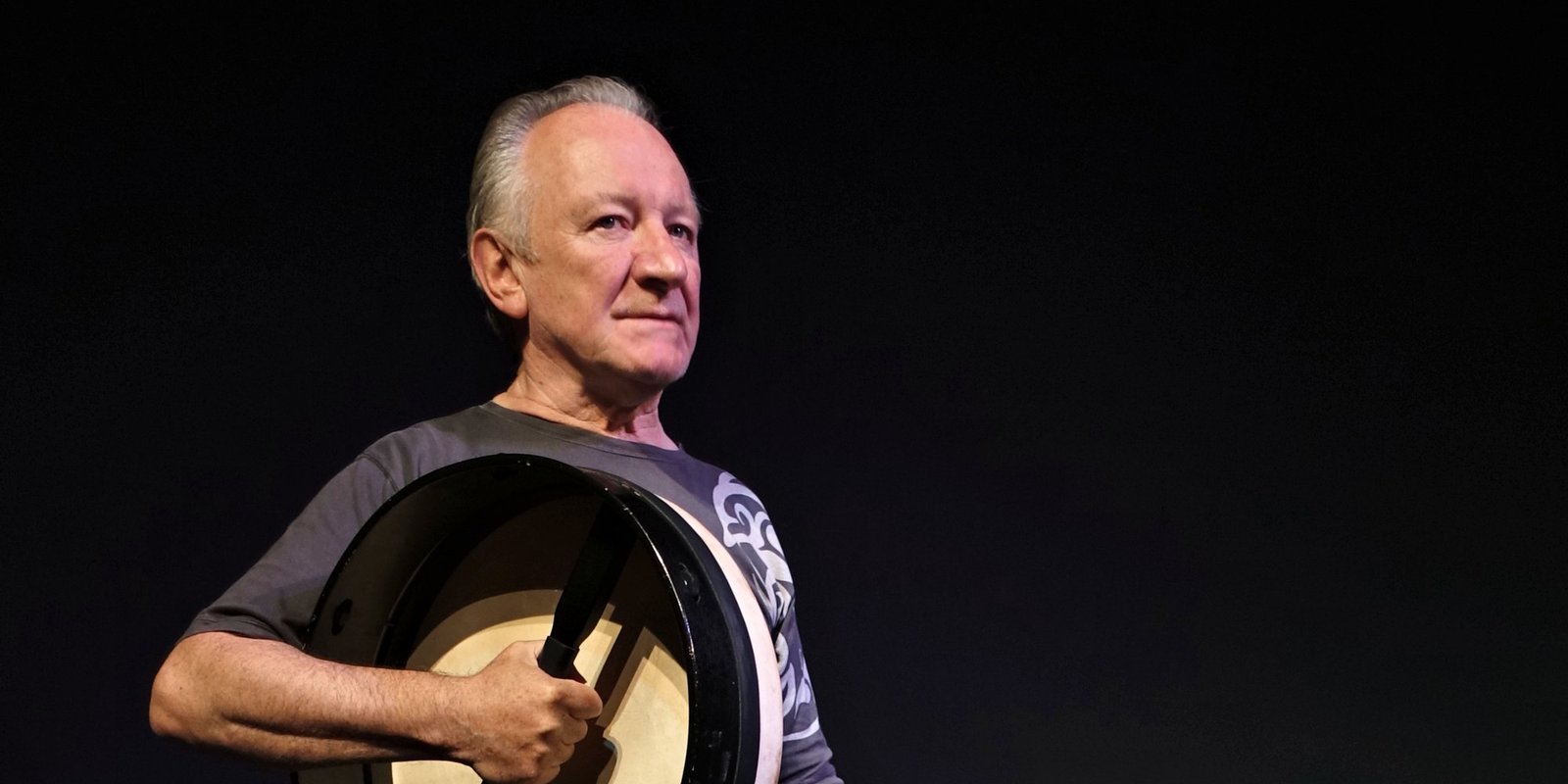
Photo: Hinnerk Rümenapf, CC BY-SA 4.0, via Wikimedia Commons, cropped to 2:1.