
China Traffic Laws: Driving Licences, Road Rules and Planning
 by
Babylon Radio
Listen nowTo drive in mainland China, arrange the appropriate Chinese driving licence or provisional permit before taking a vehicle onto the road. An International Driving Permit alone is not valid. This guide covers mainland China; Hong Kong and Macao have separate systems.
Can you use a foreign licence or an IDP?
A foreign licence may support an application for a Chinese licence or temporary permit, but it does not by itself authorise you to drive. Beijing’s official IDP guidance explains that an IDP cannot be used to drive in mainland China. Check the permitted vehicle category as well as the document’s validity.
Temporary permits for visitors
Visitors may be able to obtain a provisional driving permit. Beijing’s application guide lists identity and entry documents, an overseas driving licence with a Chinese translation, photographs and any additional documents required for the circumstances. The permitted category must match the underlying licence; permits for rented vehicles are limited to the specified small-car categories.
Read Beijing’s provisional permit instructions or Shanghai’s temporary permit guide for the place where you are applying. Confirm the office, translation requirements, validity period and rental company’s conditions before booking. Do not assume a permit can be issued on arrival without preparation.
Longer stays and a Chinese driving licence
For a longer stay, use the local traffic authority’s process for holders of an overseas licence. Residence documents, medical requirements and examinations depend on the application. Beijing’s driving services portal separates temporary permits, conversion of overseas licences and first-time applications. Choose the correct route rather than treating them as the same procedure.
Core road rules
- Keep to the right and use the lane designated for your vehicle.
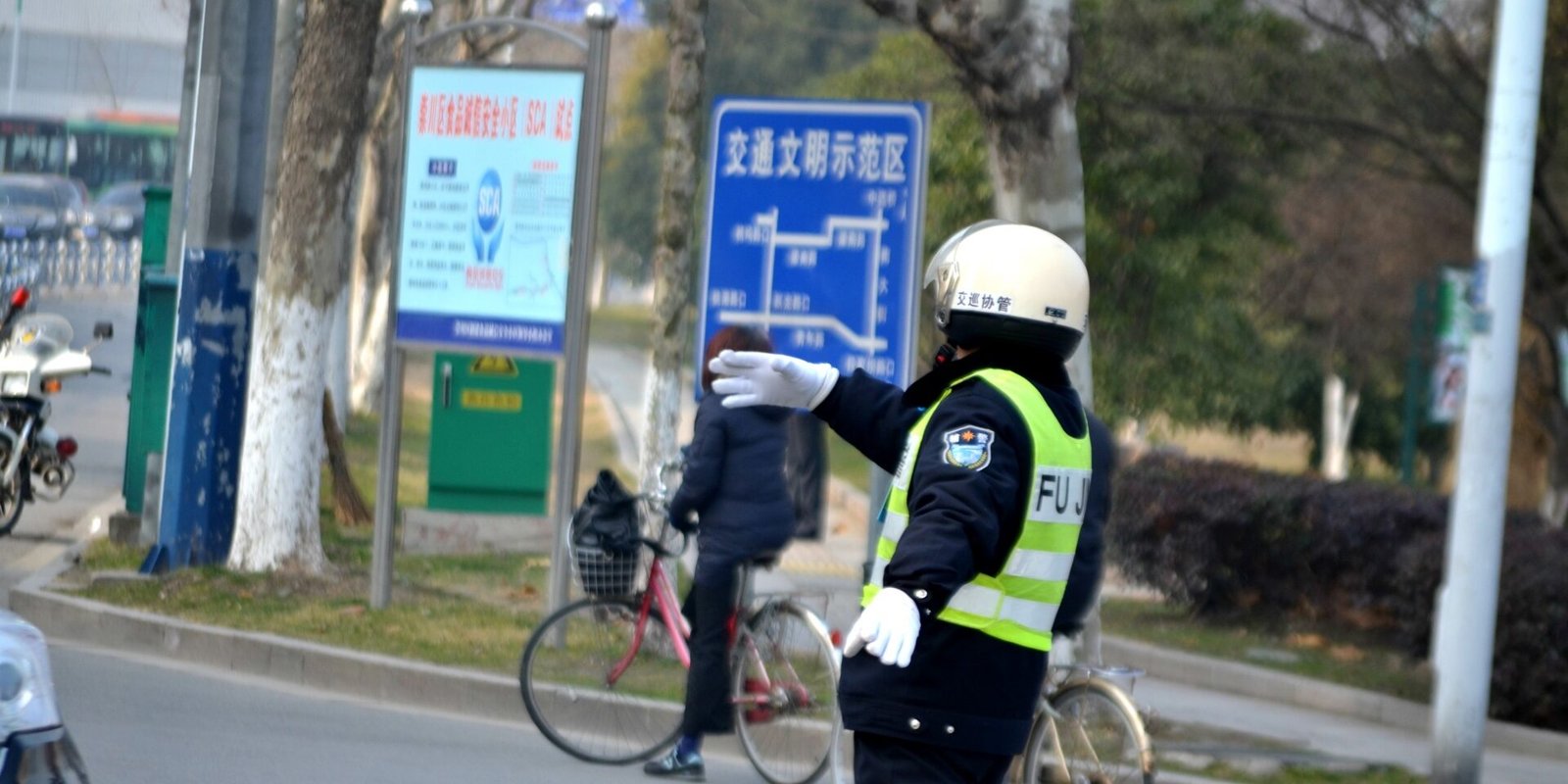
- Follow signals, road markings and directions from traffic police.
- Observe posted speed limits and reduce speed when conditions require it.
- Keep a safe following distance. Do not overtake where doing so is prohibited or unsafe.
- Slow at pedestrian crossings and stop for people crossing.
- Wear seat belts; motorcycle riders and passengers must use helmets as required.
These principles are set out in the Road Traffic Safety Law, Articles 35–51. A brief guide cannot cover every junction, road category or local restriction. In particular, do not assume a turn on red is permitted without checking the signals and rules at that location.
Check local restrictions and penalties
City access rules, restricted routes and vehicle categories need a separate check for your itinerary. Ask the traffic authority or rental company about the roads you plan to use. If you receive a penalty, follow the official notice and clarify it with the issuing authority. A generic online list of fines or points may not describe your offence or the current rules.
Before collecting a rental car
- Confirm that the licence or permit covers you, the dates and the vehicle category.
- Read the insurance cover, excess, exclusions and accident-reporting process.
- Inspect the vehicle and record existing damage with the rental company.
- Plan parking, tolls and a return route before departure.
- Keep the rental company’s assistance details available. Set navigation while parked and avoid handling your phone while driving.
If the licence arrangements or road rules are unclear, choose public transport or a licensed driver while you resolve them. Preparation is more useful than relying on claims about what other drivers commonly do.